


News
東文研セミナー「イスラーム的近代:オスマン帝国末期の革命と反動の間のウラマー」が開催されました
報告
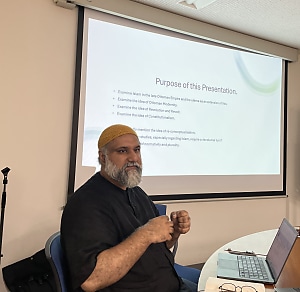
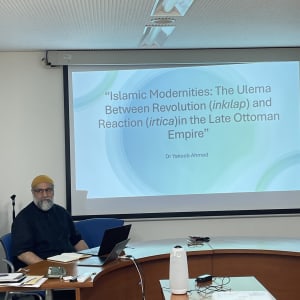
2025年8月25日に東洋文化研究所で東文研セミナー「東文研セミナー「イスラーム的近代:オスマン帝国末期の革命と反動の間のウラマー」が開催された。講師は、2024年10月から東文研の訪問研究員として研究を続けてきたイスタンブル大学のヤークーブ・アフメド氏が務めた。会場に8名とオンライン9名の参加者があった。
アフメド氏は、講演で青年トルコ革命期のウラマーの役割を再検討し、革命の過程で地方と中央のウラマーが憲法復活へ向けていかに積極的な役割を果たしたか、革命後に疎外されたマドラサ学生らが正義を求める声が、いかに「反動」と名指しされたかを論じた。また、憲法修正会議でのウラマーのプレゼンスについても強調した。質疑では、ウラマーの定義や、「反動」という語がいつから使われるようになったのか、などといった質問が寄せられた。
当日の様子
開催情報
日時:2025年8月25日(月) 16:00〜18:00
会場:東京大学東洋文化研究所3階第2会議室(302)/Zoom
講師:Yakoob Ahmed(イスタンブル大学/東洋文化研究所訪問研究員)
題目:Islamic Modernities: The Ulema Between Revolution and Reaction in the Late Ottoman Empire
司会:秋葉淳(東洋文化研究所)
講演要旨:
The prevailing narrative of the 1908 Ottoman Constitutional Revolution and the 1909 "Counterrevolution" often casts the former as a secular, progressive upheaval and the latter as a reactionary Islamic backlash. This presentation challenges that binary by re-examining the role of the Ottoman ulema in both events. Far from being a monolithic or reactionary bloc, the ulema were deeply embedded in the constitutionalist and reformist currents of the time, with many supporting the restoration of the 1876 constitution in 1908. Likewise, participation in the 1909 "Counterrevolution" was not merely a rejection of modernity, but a multifaceted response that involved competing visions of Islamic governance and moral order. By highlighting the diversity of religious thought and political engagement among the ulema, this talk argues that both the revolution and the counterrevolution unfolded within an Islamic paradigm—one that accommodated contestation, reform, and authority in dynamic ways. This reinterpretation reframes the ulema not as passive relics of a crumbling empire, but as active agents in a transformative moment of Ottoman political life.
登録種別:研究活動記録
登録日時:WedSep315:09:292025
登録者 :秋葉・多田
掲載期間:20250904 - 20251203
当日期間:20250825 - 20250825
