



News
東文研セミナー「オスマン帝国における人の移動の再検討―引揚者研究の観点から」が開催されました
報告
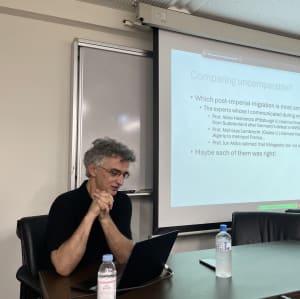
2025年6月26日、東洋文化研究所にて東文研セミナー「オスマン帝国における人の移動の再検討―引揚者研究の観点から」が開催された。このセミナーでは、日本学術振興会外国人招へい事業により来日したTOBB経済技術大学のフアト・デュンダル氏が講師を務めた。会場には10名、オンラインで9名の参加者があった。 講演でデュンダル氏は、まずオスマン帝国末期のバルカン・コーカサス地方からの移民流入と第二次世界大戦後の日本人の引揚げという二つの帝国崩壊に伴う人の移動の比較可能性について論じた後、記憶・記念という側面に焦点を当てて両者を比較した。特に近年のトルコで、ギリシアとの住民交換による移民の博物館・記念館・記念碑が建設されていることを紹介し、この事象を現代トルコの政治的文脈から分析した。講演の後、30分近く聴衆との間で活発な議論が交わされた。
当日の様子

開催情報
日時:2025年6月26日(木) 16:15〜17:45
会場:東京大学東洋文化研究所3階第1会議室(304)/Zoom
講師:Fuat Dündar (TOBB経済技術大学/東洋文化研究所訪問研究員)
題目:"Re-examining Ottoman migrations in light of Hikiagesha researches"
司会:秋葉淳(東洋文化研究所)
講演要旨:
Looking at the migrations accompanying the collapse of the Ottoman Empire (especially the 1878-1923 Balkan migrations) and the Japanese migrations that took place during the collapse of the Japanese Empire (1946-1949) obliges a total comparison. Comparing these two post-imperial migrations provides comparing political systems, population composition and distribution, identity politics, and international balances. Despite the profound differences between these two migrations that are so far apart geographically and historically, such a comparison helps us understand Ottoman migrations (muhacir) better. The absence of the phenomena encountered in Japanese repatriations (hikiagesha) in Ottoman migrations led to questioning not only the existing ones but also the ones that were not. Such a comparison will also help to place the Ottoman migrations within global history. In this presentation, where I will share the first findings of the research, I will discuss the ways in which the two migrations are remembered by comparing migration monuments as a sampling.
※このセミナーは、JSPS外国人研究者招へい事業の助成を受けて開催されました。
登録種別:研究活動記録
登録日時:Wed Sep 17 13:59:10 2025
登録者 :秋葉・多田
掲載期間:20250918 - 20251217
当日期間:20250918 - 20250918
