



News
東文研セミナー「オスマン帝国の反革命:コンスタンティノープル総主教座とオスマン領ヨーロッパの統治 (1768–1828)」が開催されました
報告
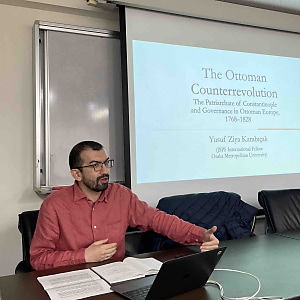
2026年3月31日、東文研セミナー「オスマン帝国の反革命:コンスタンティノープル総主教座とオスマン領ヨーロッパの統治 (1768–1828)」が開催された。本セミナーでは、日本学術振興会外国人特別研究員(大阪公立大学)のユスフ・ズィヤ・カラブチャク氏が、執筆中の単著について報告を行った。会場には6名、オンラインで18名の参加があった。
カラブチャク氏は、18世紀末のロシア・オスマン戦争から1821年に始まるギリシア革命に至る時期のキリスト教徒、特にモレアとセルビアのキリスト教徒エリートの動きと、それに対するオスマン帝国の対応を、史料の引用を提示しながら論じた。質疑応答では、「反革命」「革命」という概念の妥当性、キリスト教徒エリートから総主教座に対する批判があったか、ファナリオットの役割は、などについての質問があり、議論が交わされた。
カラブチャク氏は、18世紀末のロシア・オスマン戦争から1821年に始まるギリシア革命に至る時期のキリスト教徒、特にモレアとセルビアのキリスト教徒エリートの動きと、それに対するオスマン帝国の対応を、史料の引用を提示しながら論じた。質疑応答では、「反革命」「革命」という概念の妥当性、キリスト教徒エリートから総主教座に対する批判があったか、ファナリオットの役割は、などについての質問があり、議論が交わされた。
当日の様子
開催情報
日時:2026年3月31日(火) 16:00〜18:00
会場:東京大学東洋文化研究所3階第1会議室(304)/Zoom
講師:Yusuf Ziya Karabıçak(大阪公立大学/日本学術振興会)
題目:The Ottoman Counterrevolution: The Patriarchate of Constantinople and Governance in Ottoman Europe, 1768–1828
司会:秋葉淳(東洋文化研究所)
会場:東京大学東洋文化研究所3階第1会議室(304)/Zoom
講師:Yusuf Ziya Karabıçak(大阪公立大学/日本学術振興会)
題目:The Ottoman Counterrevolution: The Patriarchate of Constantinople and Governance in Ottoman Europe, 1768–1828
司会:秋葉淳(東洋文化研究所)
講演要旨:
This presentation introduces a book-in-progress that rethinks revolution and counterrevolution in the Ottoman Empire between the Ottoman–Russian War of 1768–1774 and the Greek Revolution of 1821. It argues that revolutionary possibilities in Ottoman Europe emerged not only from the circulation of new ideas and foreign intervention, but from long-standing local–imperial entanglements that bound Orthodox Christian elites, Ottoman officials, and the Ecumenical Patriarchate into shared structures of governance. Rather than treating Orthodox populations as external to Ottoman political history, the presentation places them at the center of an Ottoman Age of Revolutions, tracing how local notables and clergymen articulated claims of liberty, fatherland, and rights within an imperial idiom. It further shows that Ottoman counterrevolution took shape through an evolving alliance between the Sublime Porte and the Patriarchate of Constantinople, aimed at managing local powerholders, containing revolutionary rhetoric, and preserving imperial order.
登録種別:研究活動記録
登録日時:WedApr2209:28:182026
登録者 :秋葉・神林
掲載期間:20260422 - 20260721
当日期間:20260331 - 20260331
ご意見・お問い合わせ: